 georglind.dk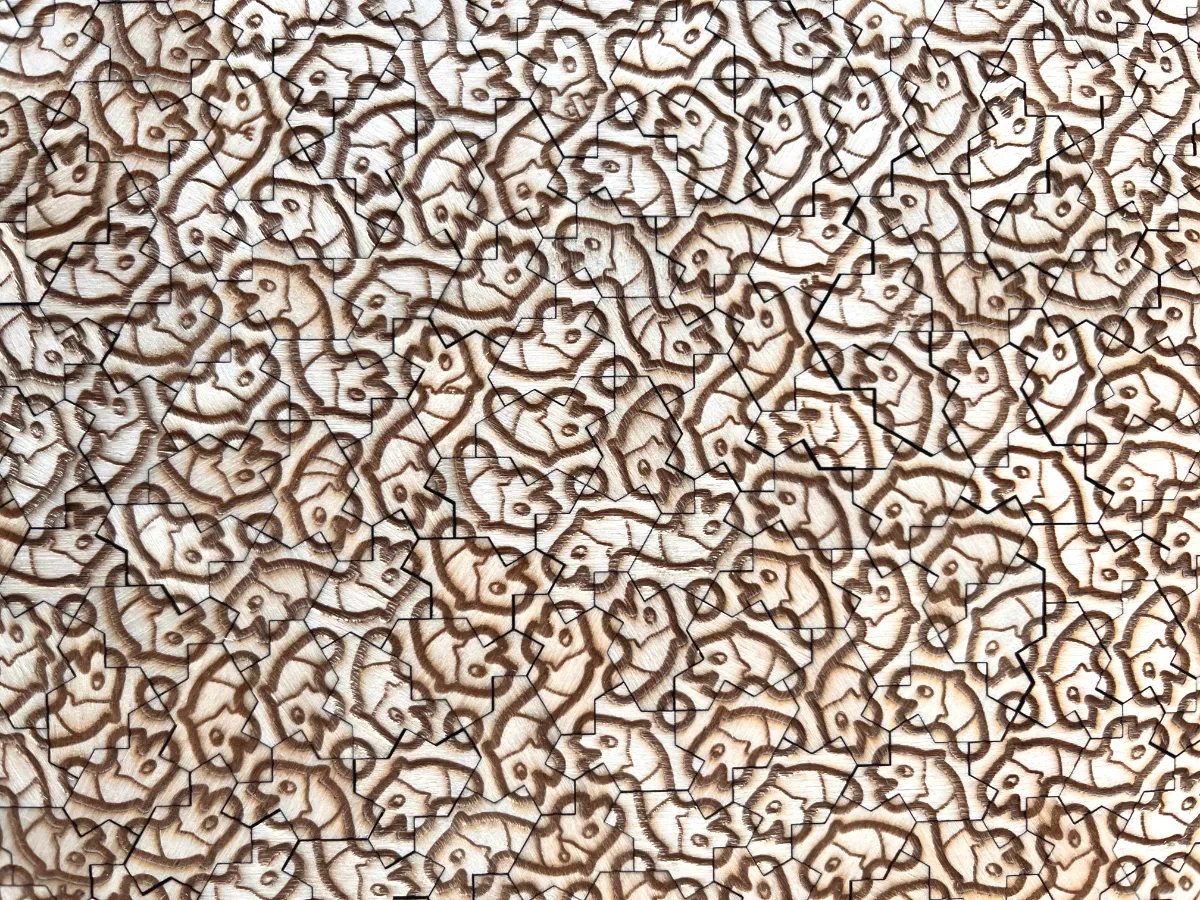
What happens when you combine an einstein with 18th-century French decorative patterns? You get swimming pirate fish made from laser-cut plywood. Or rather, that is what I got. Let me tell you the story.
First we must unravel the mystery of the einstein, move on to the delightful father Truchett, before we end up with the two-legged pirate fish.
The Einstein
It all began with the einstein.
Everybody is a genius. But if you judge a fish by its ability to climb a tree, it will live its whole life believing that it is stupid.
— Misattributed to Einstein
Not that einstein, though. An einstein is a very specific hypothesized shape. Until recently it was unknown if it even existed. To understand what makes it so special, we must first talk about tilings.
We are used to tilings being periodic. The most obvious example is the standard tiling of squares. By shifting the tiling over by a side length in either direction, we end up with the original identical tiling — and this means that this tiling is periodic. What if you had to come up with a tiling that is not periodic? Do you have any ideas?
One idea for an aperiodic tiling would be something with a center. Imagine e.g. a tiling where the tiles form concentric rings. All translations of this tiling would result in a new tiling with the center in a new place. If you have a hard time imagining how such a tiling may look, I believe that the most well-known example of such an aperiodic tiling is the Penrose tiling:
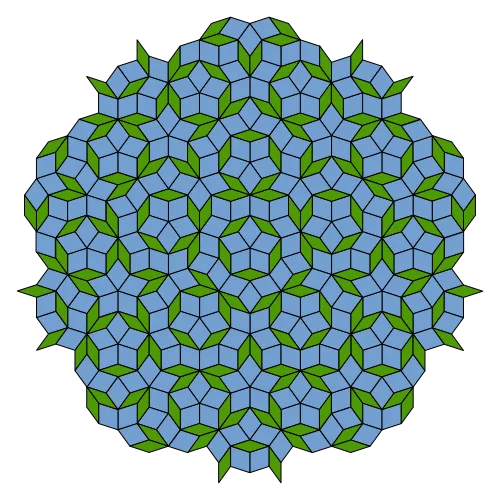
While impressive, the Penrose tiling has but one defect: It requires two distinctly different shapes (in the figure they are colored green and blue). If there was an aperiodic tiling that only required a single shape, that would be even more impressive. And the name of this impressive tile? The Einstein — a humourous play on the German “Ein Stein” (one stone).
For many years mathematicians were looking for this elusive shape, and it was thought that it had to be very complicated. But then — only a couple of years ago — the first true einstein was discovered. The discovery was made by amateur mathematician David Smith, and he made quite the media splash with a startlingly simple einstein:
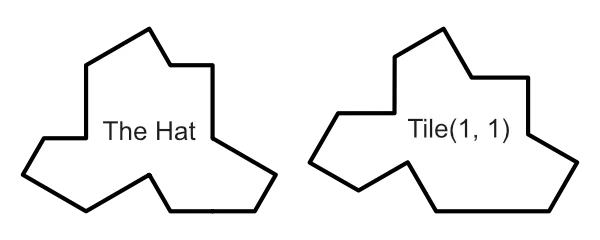
Smith called this 13-sided polygon the “hat”, and with the help of three professional mathematicians he showed that the “hat” and its mirrored shape tiles the plane aperiodically.
While the “hat” got its 15 minutes of fame, I was personally much more intrigued by their follow-up paper on a chiral aperiodic monotile. Here Smith et al. showed that another shape - a close relative of the “hat” - a 14-sided polygon called “Tile(1,1)” could actually tile the plane aperiodically all by itself — no need for its mirrored shape.
Truchet tiles
The Tile(1,1) has 14 sides of identical lengths (if counting the long side as two) and that inspired me to create a puzzle of these tiles decorated in the fashion of truchet tilings.
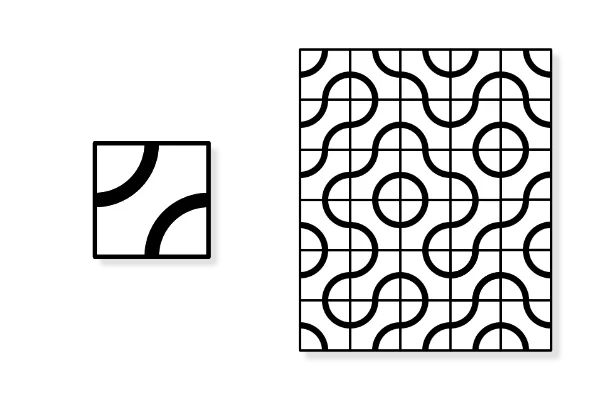
Truchet was a French priest and polymath who designed canals, fonts, weapons, watches and also: decorative tilings. Truchet tiles are square tiles with a non-symmetric pattern - like these square tiles with a pattern of two quarter circles. Truchet noted that by combining these tiles interesting patterns could quickly emerge:
I pondered for some time how to create interesting truchet patterns on Tile(1,1). I played around in my vector drawing program, and eventually produced something interesting. In this first experiment, I connected the midpoints of each side of the tile with crossing lines.
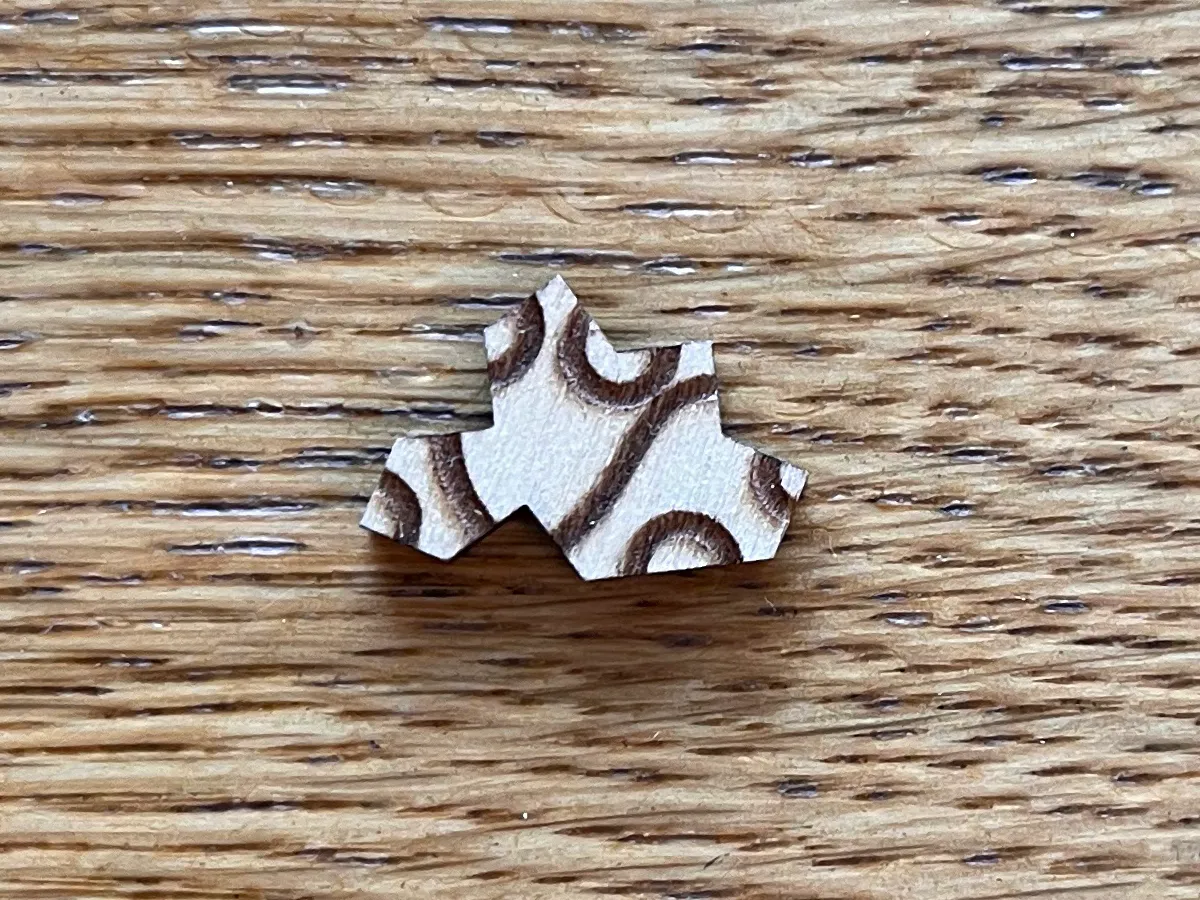
I chose this particular pattern because it creates these mesmerising long meandering lines that wrap around themselves in wild, organic ways.
After having my laser cutter commit the whole puzzle to 3 mm birch plywood, I cut out the backplate, glued on the outer frame and finally had this:
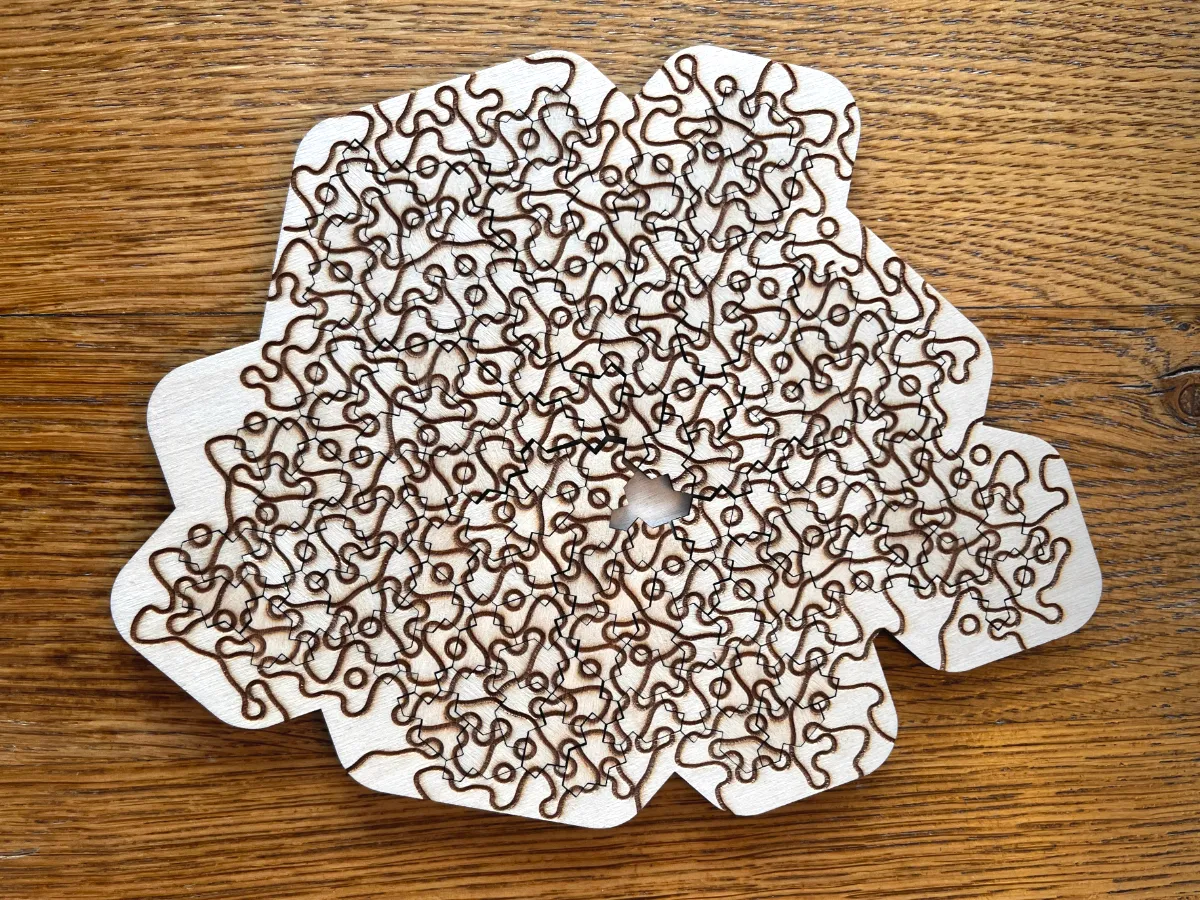
While the truchet decorations posed one part of the experiment, the other — and far more important — was whether the puzzle actually worked as a puzzle. Would a puzzle with all identical pieces actually prove satisfying to solve?
I sat down for the final test. I put one piece down, then another, then another. I was getting frustrated: It all seemed too easy! I kept putting down pieces quickly until suddenly — I encountered a dead end. I scratched my head and tried to think. I removed one piece, and another and another. I ended up removing almost all the pieces I had laid down until I found one piece that could be oriented differently, and then I tried again. And soon was once more at a dead end. The dead ends kept showing up, but in the end I prevailed, and I was smiling. It had in fact worked. It was challenging, but not impossible. Eureka!
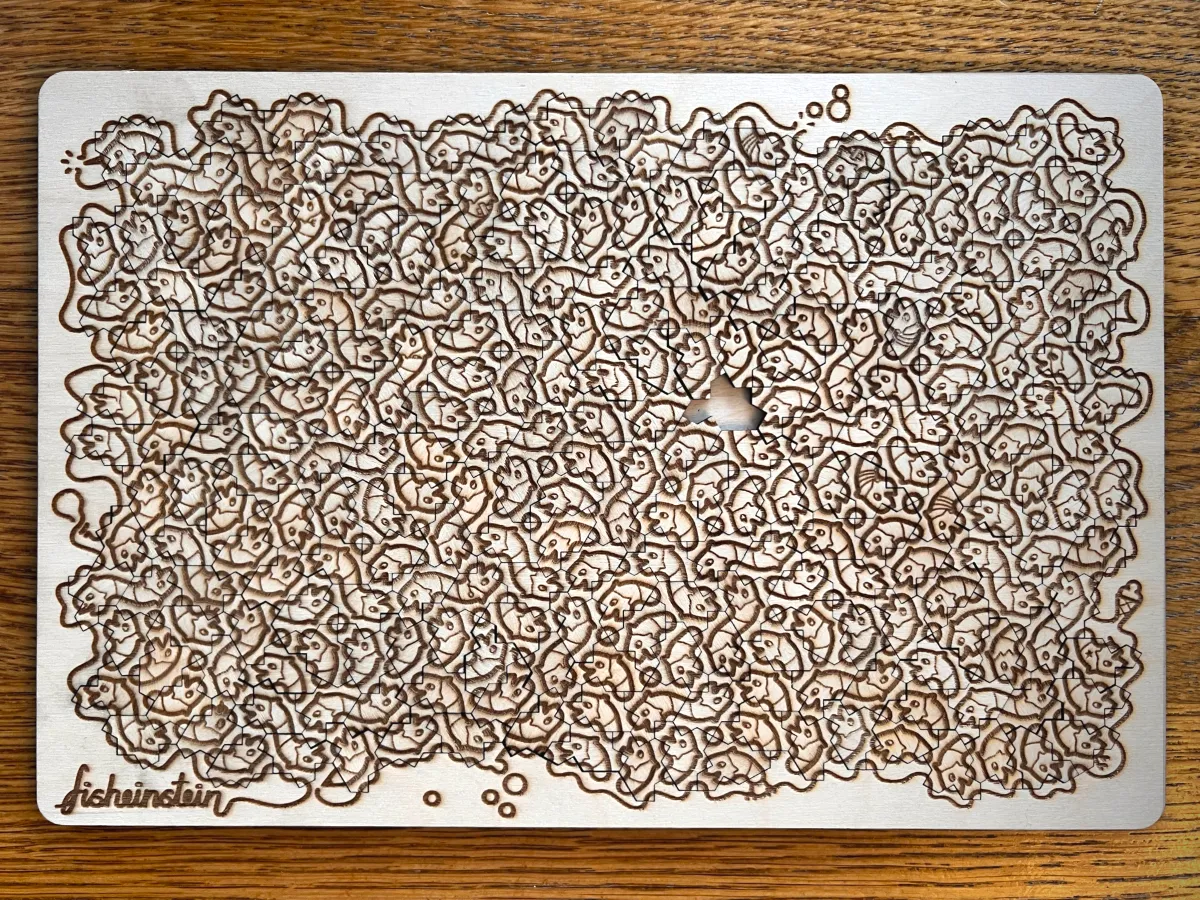
So the puzzle worked mechanically, but something bothered me aesthetically. I used a large book to flip the puzzle upside down and cautiously removed the book and lifted the backplate. Looking at the backsides of the pieces I recognized some patterns. I doodled a bit on the backsides of the pieces and then went back to my vector drawing program. There I started to undo my crossing lines for a simpler pattern that stayed more true to its truchet origins. Finagling around, I suddenly ended up with a whole school of little fish-like creatures.
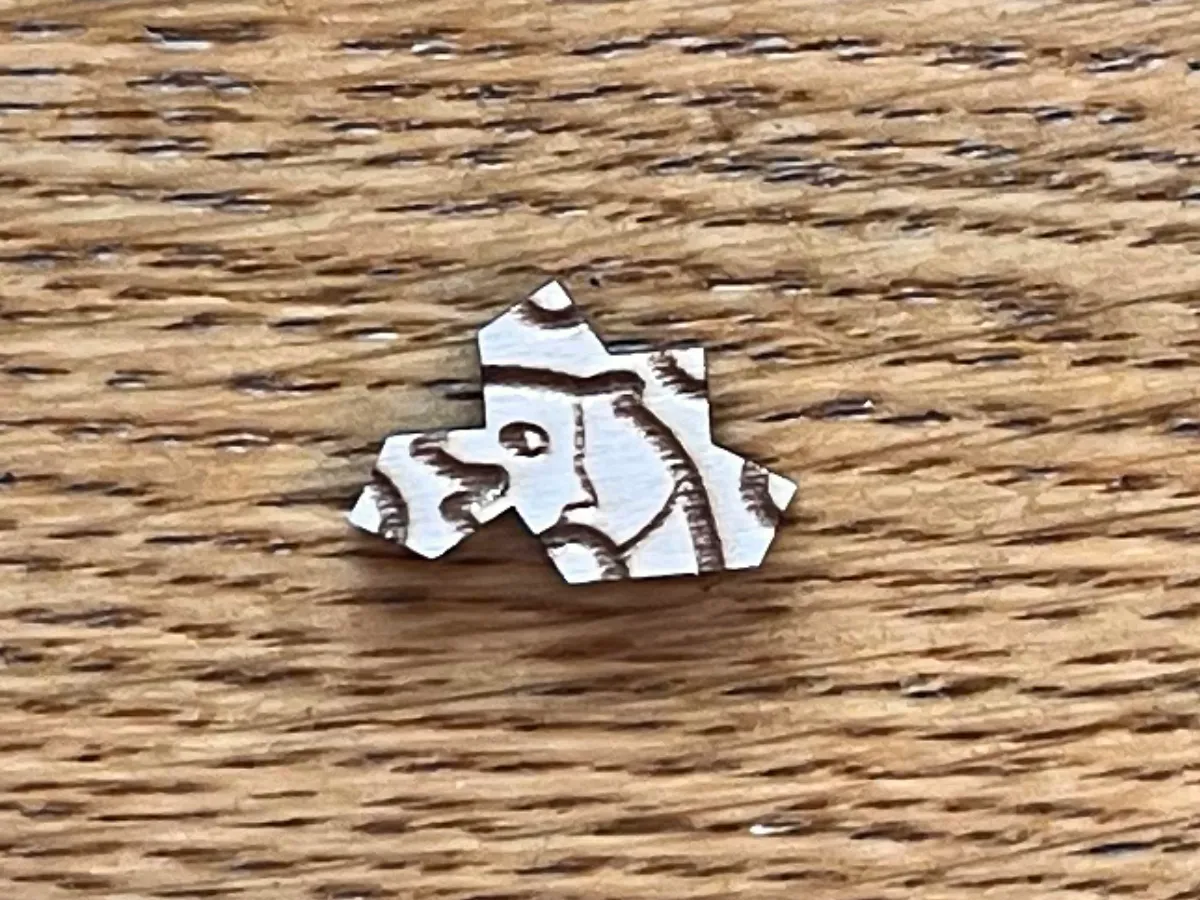
Once I started, I could not help but decorate each fish a bit differently. Can you spot the narwhal, the pirate or the fish with legs?
Other ideas
There is a substantial satisfaction — nay even pride — in coming up with an idea all by yourself. The pang of disappointment or almost disillusionment can hit you hard, when you then realise that somebody actually came up with the same idea before you did.
During the research for this blog post, I stumbled upon a wonderful design by Swiss Christian Walther who entered his experiment into the “Mat Hat Competition” celebration of the discovery of the einstein tiles. I recommend you check out his github https://github.com/cwalther/monotile-puzzle/.
An indie puzzle producer known as Nervous has also developed a very similar idea before me: https://n-e-r-v-o-u-s.com/blog/?p=9333. Very beautiful!
Final thoughts
So while I wasn’t the first to think of Einstein tile puzzles, I was perhaps the first to decorate them with fish. And that’s good enough for me. If you build your own, send me a photo - I’d love to see what patterns you create.